
How much do workstation countertops cost in Florida?
Workstation countertop cost depends on bench length, material hardness (impact and chemical resistance), and feature integration. Most workshop benches run 4–8 feet.
Material hardness and chemical resistance drive cost
Quartz (Mohs 7) is the practical standard for workshops. Granite is harder (Mohs 6–7) and holds edge tools better but requires sealing. Chemical resistance (oils, solvents, cleaners) is non-negotiable — porous materials absorb and stain permanently.
Tool impact tolerance — fabrication and durability
Workshop surfaces endure hammers, chisels, grinding wheels, and soldering irons. Material must be hard enough to resist indentation from repeated impacts. Quartz handles daily tool abuse without scarring visible on the working surface.
Heat tolerance if soldering, welding, or hot work
For workshops with direct heat work (soldering, welding, hot glue), granite is the only acceptable material. Quartz resin binder fails above 350°F. If heat is in the equation, material choice is a functional decision, not aesthetic.
Workstations punish cheap materials within months. Invest in hard, chemical-resistant surface once — your tools and projects deserve a surface that lasts a decade without degradation.

Workstation Materials — Impact and Chemical Resistance
Workshop surfaces face tool impact and chemical exposure. Here's what doesn't fail.
Quartz — The Workshop Quiet Winner
A workstation counter — garage, workshop, hobby room, craft area — is where most countertop materials fail and Quartz quietly wins. Hammers, soldering irons, mineral spirits, two-part epoxy, stained rags, the occasional dropped wrench: quartz handles every one of those without staining, etching, or cracking. The surface won't absorb oil from a leaking part, won't hold the smell of solvent, and won't show the scuff from sliding a tool box across it.
Granite — For Direct Heat Work
For a true workshop where heat will happen — soldering, small welding, hot glue work — we'll spec Granite in the work zone and Quartz on the surrounding storage and prep counters. Granite's thermal tolerance is the only honest answer for direct-heat tool contact, and the natural texture hides the inevitable scratches better than any engineered surface.
No Soft Materials Here
Skip marble, skip butcher block, skip anything porous. Workstations punish soft materials within months, and the rework cost is always more than choosing right the first time.
Workstation Layouts — Single Bench, L-Shaped, Multi-Zone
Workstation layout depends on available space, tool footprint, and work types. Most run straight along one wall or L-shaped in a corner.
Workstation layout determines workflow efficiency and tool accessibility. A straight bench works for linear production (assembly line). L-shaped layouts support multiple work types (cutting on one side, finishing on the other).
- Single Straight Bench (4–8 feet):
- Linear work surface against one wall. Ideal for single-task production, assembly, or detail work. Simple fabrication, maximum workspace per footprint.
- L-Shaped Workshop:
- Two perpendicular benches creating a corner configuration. One side for cutting/machining, perpendicular for finishing or assembly. Efficient tool placement and workflow.
- Dual-Function Bench:
- One side heavy-duty work (impact-tolerant), other side precision work (flat, level). Supports different tool types and techniques in one workspace.
- Peninsula Workbench:
- Bench extending from one wall into the shop, accessible from multiple sides. Works well in small shops needing access from different directions.
- Multi-Zone Workshop Suite:
- Multiple connected benches for different work types: metal work zone, wood work zone, assembly zone, finishing zone. Large workshops optimized for productivity.
Stop guessing. Get a real number.
Free in-home visit. Written line-item estimate within 24 hours. No pressure.
Edge Profiles for Workstation Countertops
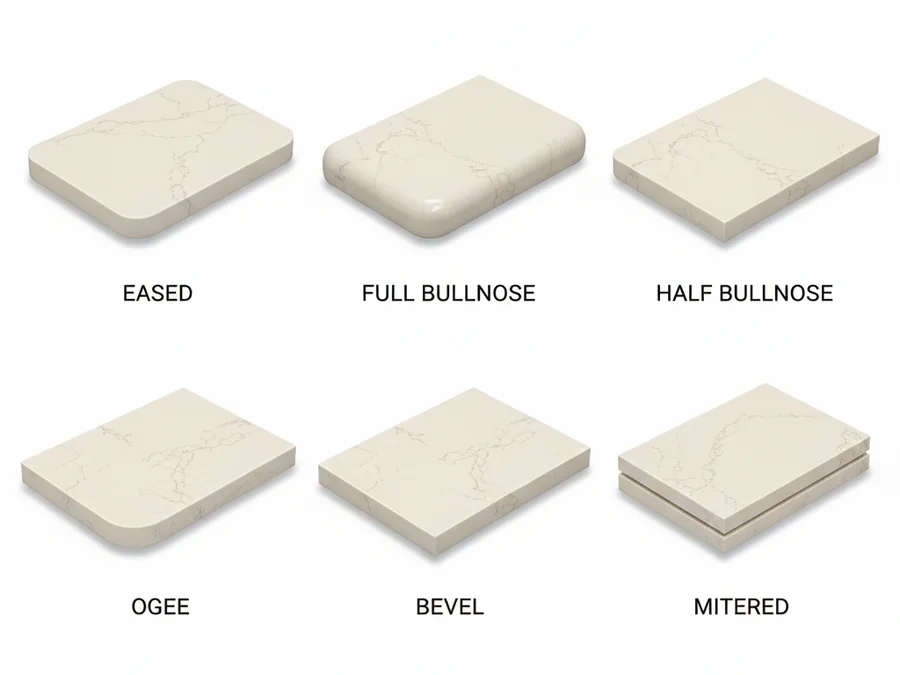
Workstation edges are functional, not decorative. Eased or minimal profiles prevent tool snags and are easy to clean of dust and debris.
Workstation edges don't need design — they need durability. Soft edges prevent tools from catching; simple profiles minimize crevices where dust and chemical residue accumulate.
- Eased Edge: Slightly rounded, functional and practical. Prevents tool snags, easy to wipe clean, doesn't interfere with precision work or gauge placement.
- Minimal Bullnose: Very subtle rounding, keeping the edge nearly flat while removing sharp corners. Maintains precision while preventing tool damage.
- Straight Edge (Minimal Radius): Nearly flat with just enough rounding to prevent sharp corners. Maximizes precision surface and minimizes visual features.
- Beveled Edge (Light Bevel): Very subtle 20–30-degree angle, adding slight definition without interfering with work. Practical detail without compromising function.
- No Radius (Precision Edge): Absolutely flat, no radius at all — for precision work where gauge lines and straightedges must sit perfectly flat. Not typical but available for exacting work.
Integrated Features for Workstation Countertops
Workstation features enhance tool organization, safety, and precision, from vise mounts to cable routing.
Workstation features support tool use and organization. Vise mounting, solvent resistance, level tolerance, and accessible storage all contribute to efficient, safe work.
- Vise Mount Integration: Integrated mounting points or threaded holes for bench vise installation. Allows clamps and vises to be positioned exactly where the work flows.
- Solvent-Resistant Surface: Non-porous material that doesn't absorb oils, mineral spirits, acetone, or other workshop solvents. Spills wipe clean; surface doesn't degrade or stain.
- Precision Level Tolerance: Fabricated to exacting flatness standards (±1/32" over 10 feet) for precision work where surface unevenness affects tool accuracy.
- Tool Storage Integration: Open shelving, pegboard mounting, or cubby integration for frequently used tools. Keeps tools accessible without cluttering the work surface.
- Heavy-Duty Edge Banding: Reinforced edge material for impact resistance. Protects against hammer strikes, dropped tools, and the daily abuse of workshop use.
Our 7-step Bathroom Countertop Installation Process
Our proven 7-step process ensures a smooth, efficient, and precise installation of your new bathroom countertops, from initial consultation to final inspection. We manage every detail with craftsman precision and clear communication.
- Step 1: Initial Consultation & Material Selection. We begin with a detailed discussion of your vision, material preferences, and budget, guiding you through our extensive selection of materials suitable for Florida bathrooms.
- Step 2: On-Site Measurement & Templating. Our technicians visit your home in Panama City to take precise digital measurements, creating custom templates that account for all angles, cutouts, and unique features of your bathroom space.
- Step 3: Custom Fabrication. Using advanced machinery and skilled craftsmanship, your chosen material is cut, shaped, and polished according to the exact templates, including specified edge profiles and sink cutouts.
- Step 4: Quality Inspection. Before installation, each fabricated piece undergoes a rigorous quality check to ensure it meets our exacting standards for finish, dimensions, and structural integrity.
- Step 5: Professional Demolition (if needed). If replacing existing countertops, our team carefully removes and disposes of the old material, preparing the site for the new installation.
- Step 6: Expert Installation. Our certified installers meticulously place and secure your new countertops, ensuring perfect alignment, level surfaces, and seamless integration of sinks and other features.
- Step 7: Final Walkthrough & Care Instructions. We conclude with a thorough walkthrough to ensure your complete satisfaction and provide detailed instructions for the care and maintenance of your new bathroom countertops.
This systematic approach guarantees a superior result for every project.
Skip the back-and-forth.
Templating, fabrication, install — one Florida-licensed crew, one warranty.
Why Workstations Need Non-Porous, Hard Materials in Florida
Workshop surfaces face tool impact, chemical exposure, and humidity. Porous materials absorb solvents and fail within seasons in Florida's climate.
Workshop chemicals destroy porous materials instantly
Mineral spirits, acetone, linseed oil, and metal cleaner will permanently stain marble, granite (if unsealed), and butcher block. One spill ruins the surface. Quartz doesn't absorb anything — spills wipe clean.
Tool impact is constant — material hardness matters
Chisels, mallets, hammers, and grinding wheels impact the surface daily. A softer material like butcher block or acrylic shows every ding within weeks. Quartz (Mohs 7) resists indentation and continues looking professional under heavy use.
Florida humidity + solvent exposure = rapid degradation on soft materials
Humid Florida workshops cause wooden and acrylic surfaces to swell, warp, and crack. Add chemical exposure (oil, solvents) and soft materials fail within a year. Quartz is immune to humidity and chemically resistant.
Don't baby your workstation. Choose a material that handles abuse and chemical spills without thinking twice. Quartz lets you focus on the work, not protecting the bench.
7 mistakes that cost homeowners thousands
Avoid these pitfalls. They lead to mold, water damage, remakes, and warranty voids.
Picking the wrong material for Florida humidity
Marble and unsealed granite absorb moisture. Result: mold in 3–6 months, permanent etching, $5K+ replacement. Non-porous materials (quartz, solid surface) resist humidity without maintenance.
Skipping professional templating
DIY measurements or contractor shortcuts = ill-fitting countertops. You discover the problem after fabrication. Remake costs $2K–5K. Professional digital templating costs $200–500 and saves everything.
Choosing sharp, intricate edge profiles
Ornate edges (complex ogee, thin bevels) chip easily in bathrooms. Kids bang them on sinks, towel racks catch them. Go eased, bullnose, or half-bullnose for durability and safety.
Sloppy sink cutouts and sealing
Water creeps under undermount sinks if edges aren't sealed perfectly. Moisture rots the cabinet and subfloor underneath within 1–2 years. Pro installation includes full waterproofing.
Ignoring bathroom ventilation
Poor exhaust fans leave humidity trapped. Even quartz degrades faster with stagnant moisture. Run your exhaust fan during AND 20 minutes after showers. Better yet, install a humidity sensor fan.
Attempting DIY installation
Countertop installation requires precision tools, skill, and insurance. Mistakes void warranties, damage cabinetry, and cost more to fix than hiring pros upfront.
Buying from sellers with no Florida experience
National chains don't understand Florida's humidity challenges. They'll sell you marble or recommend lightweight edge profiles that fail. Pro Build specializes in Florida bathrooms — we know what lasts.
How to Identify a Qualified Bathroom Countertop Contractor
Selecting a qualified contractor is paramount for a successful bathroom countertop project. A reputable professional ensures quality materials, precise fabrication, and expert installation, backed by proper credentials and a commitment to service.
- Florida Licensed & Insured:
- Verify that the contractor holds a current Florida contractor's license and carries comprehensive insurance, including liability and workers' compensation. This protects you from potential issues during the project. Pro Build Countertop Company is Florida licensed, insured, and bonded.
- Demonstrated Experience:
- Look for a company with a proven track record specifically in countertop fabrication and installation. Pro Build Countertop Company was founded in and has over 10 years of experience.
- Transparent Quoting Process:
- A qualified contractor provides a detailed, itemized quote that clearly outlines all costs, materials, and scope of work without hidden fees. We offer a 5-minute callback on every quote request.
- References & Portfolio:
- Request references from previous clients and review a portfolio of completed bathroom projects to assess the quality of their craftsmanship and design capabilities.
- Manufacturer Warranty & Guarantees:
- Ensure the contractor offers manufacturer warranties on materials and provides a written installation guarantee for their workmanship. This demonstrates confidence in their products and services.
Choosing a contractor who meets these criteria ensures a professional experience and a lasting investment.
Ready to plan your project?
5-minute callback. Free in-home consultation across 66 Florida counties.
Our Bathroom Countertop Warranty and Guarantee
At Pro Build Countertop Company, we stand behind the quality of our materials and the precision of our workmanship. We provide comprehensive assurances for your peace of mind, ensuring your investment is protected.
- Manufacturer Warranty:
- All countertop materials we install are covered by their respective manufacturer warranties. These warranties protect against defects in the material itself, ensuring you receive the quality you expect from leading brands.
- Written Installation Guarantee:
- Beyond the material warranty, Pro Build Countertop Company provides a written installation guarantee. This covers the quality of our fabrication and installation work, ensuring your countertops are installed to the highest industry standards and perform as expected.
- Florida Licensed, Insured, and Bonded:
- As a Florida licensed, insured, and bonded contractor, we adhere to all state regulations and industry best practices, offering an additional layer of protection and assurance for our clients across all 66 Florida counties.
Our commitment to quality extends through every phase of your project, from selection in Panama City to the final installation and beyond.
What drives the cost of your project
Every Pro Build estimate is itemized so you see exactly where the investment goes. The factors below shape the final number, in roughly descending order of impact:
- Countertop material selection (e.g., quartz, granite, solid surface)
- Total square footage and linear feet required
- Complexity of the layout (e.g., single vanity vs. double-master with angles)
- Chosen edge profile (e.g., eased, bullnose, ogee)
- Number and type of sink cutouts (e.g., undermount, integrated)
- Inclusion of additional features (e.g., integrated drainboards, custom splash returns)
- Need for demolition and disposal of existing countertops
- Any specialized fabrication requirements or custom design elements
We do not publish flat per-square-foot figures because every Florida home is different — slab grade, edge profile, sink cutouts, and demolition all move the needle. Your free in-home consultation produces a written line-item estimate within 24 hours.
Side-by-side comparison
A direct visual comparison of attributes that matter when you choose.
| Attribute | Quartz | Granite | Solid Surface |
|---|---|---|---|
| Hardness/durability | Very high (engineered stone) | High (natural stone) | Mid (acrylic/polyester) |
| Maintenance | Low (non-porous, no sealing) | Mid (requires periodic sealing) | Very low (non-porous, seamless) |
| Porosity | Non-porous | Porous (requires sealing) | Non-porous |
| Heat tolerance | High (can scorch with extreme heat) | Very high | Low (can melt/scorch) |
| FL coastal use | Excellent (humidity/mold resistant) | Good (if properly sealed) | Excellent (humidity/mold resistant) |
| Price tier (no $) | Premium | Premium to Mid | Mid |